Blog

How Small Gardens Spark Curiosity and Shape a Healthier Planet
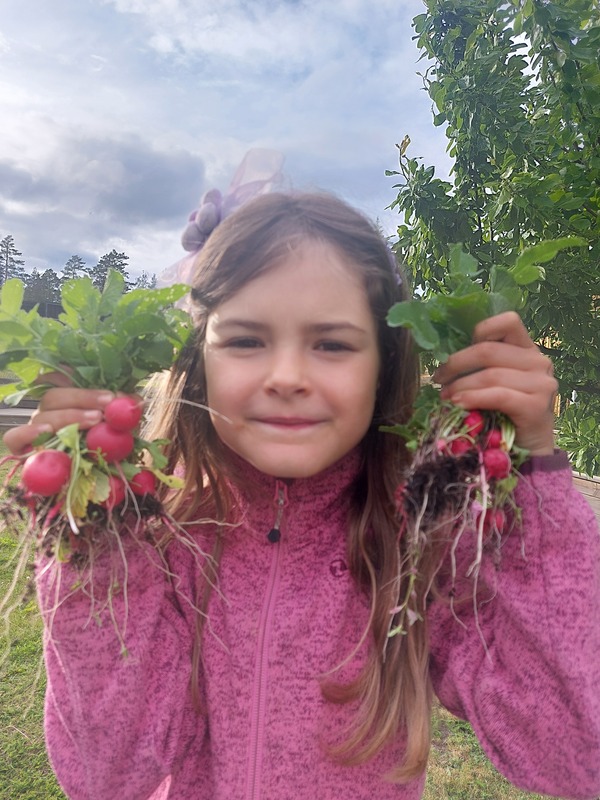
There is a special kind of quiet magic that happens when we spend time with children in the garden. The world slows down. Hands sink into the soil. It is time to bring family together and spark curiosity that wakes up in the simplest and most natural way. Gardening is perfect activity for learning by doing. Additionally, this is the way to way to show kids that sustainability is not a distant concept, but something they can touch, smell, taste, and nurture with their own hands.
I am grateful to live in Uppsala, where scientific heritage meets everyday family life, gardening becomes a bridge between past and future. From Linnaeus’s legacy to today’s biodiversity research, this city reminds us that small actions, even in a balcony pot, can have global impact. In a time when environmental challenges feel overwhelming, a small garden offers a gentle truth: change begins one harvest, one habit, and one home at a time.
Small gardens, big Impact even in backyards and balconies. You don’t need a large farm or perfect conditions to live sustainably. You don’t need acres of land or expensive equipment.
Growing even a handful of herbs, a pot of tomatoes, or a balcony box of pollinator friendly flowers can:
• support local biodiversity
• reduce food miles
• strengthen children’s connection with nature
• create daily rituals of care and responsibility
• spark curiosity about how life works
Sustainable living begins with small, consistent choices:
• composting kitchen scraps
• growing seasonal crops
• saving seeds
• creating green spaces for bees and butterflies
• observing insects and plants together
• letting children ask questions and discover answers through play
Every small garden in Lindbacken, every backyard in Fålhagen, every shared courtyard in Kåbo can become a living laboratory for sustainability, a place where children learn by doing, observing, and caring. Gardening is not one time activity, it takes time and patience, focus and love. All of these skills we would need to teach our kids. Also, when children feel ownership of a garden, even a tiny one, something beautiful happens: they begin to see themselves as part of nature, not separate from it.
From Linnaeus to today: Uppsala’s gardens with global impact
Here in Uppsala, we are surrounded by living scientific history. The Linnaean Gardens: Linnaeus’ Hammarby, the Linnaeus Garden, and the Botanical Garden are not just beautiful places to visit with kids. They are living research infrastructures that preserve plant diversity, support taxonomy, and help the public understand biodiversity through direct experience.
These collections, now published openly through GBIF, connect Sweden’s scientific heritage with today’s global need for open biodiversity data. It is a powerful reminder that acting locally can create global impact.
A family visit to these gardens is more than a weekend outing, it is a chance for children to see how curiosity, observation, and care for nature have shaped science for centuries.
Imagine standing with your child in the Linnaeus Garden, surrounded by the same species that Carl Linnaeus once studied. Imagine showing them how a simple question “What is this plant?”, led to a global system of classification that changed science forever.
Curiosity is contagious. And gardens are the perfect place to catch it.
Gardening as a Family Ritual
When we garden with children, we teach them:
• patience
• responsibility
• wonder
• the joy of nurturing life
• the value of small, consistent actions
• the beauty of caring for something beyond themselves
We also give them something deeper: a sense of belonging in the natural world.
Gardening becomes a ritual, a rhythm that grounds the family. A moment of connection in busy weeks. A shared project that grows with the seasons.
Children learn that:
• soil is alive
• insects have jobs
• plants communicate
• weather matters
• food has a story
• sustainability is something they can practice, not just hear about
And perhaps most importantly, they learn that their actions matter.
Together, we can cultivate healthier communities, reduce environmental impact, and inspire the next generation of change makers and not through grand gestures, but through everyday actions rooted in care.
So, what are you growing this season A tomato plant? A pot of basil? A corner of wildflowers for the bees? Lavander? A child’s curiosity?
Whatever it is, it matters.
Because every small garden is a seed of hope. Every balcony box is a lesson in responsibility. Every compost bin is a step toward sustainability. Every flower is a gift to the pollinators. Every question from a child is a doorway to learning. Every moment spent together in the garden is a memory that roots them in nature.
Together, we can cultivate a healthier Uppsala, reduce environmental impacts, and inspire the next generation of change makers-one seed, one question, one child at a time.
Warmly,
Zorana
Science Market Uppsala
Small hands, small seeds => big change.