
Blog

Spark Curiosity. Build Connection. Uppsala Showed Up for Both at Kulturnatten 2026
Spark Curiosity. Build Connection. Uppsala Showed Up for Both at Kulturnatten 2026
Kulturnatten always asks a simple question: what if a whole city stopped for one night and just paid attention to each other? On Saturday, September 12, 2026, Science Market Uppsala got to answer that question from a booth in Barnområdet KulturKnatten, Odinslund and Uppsala families answered it back, over and over, for six straight hours.
More than 500 families stopped by. They squeezed lemons. They watched purple cabbage water turn shocking shades of pink. And then, just a few steps away, many of them sat down, put their phones in a basket, and really listened to their kid for two whole minutes. That combination, loud chemistry next to quiet connection, turned out to be exactly the night we hoped it would be.
The Lemon Lab: Science You Can Taste, See and Feel
At the first table, Lemon Lab, it was hands, cups and citrus everywhere. Kids and parents pressed their own lemonade while we told the short, surprising story of the lemon itself: how it travelled across continents, and how one ordinary fruit carries both chemistry and cultural history in its skin. Nobody got a lecture. They got to taste it.
A few steps over, at the pH station, that same lemon juice met a red cabbage indicator, and the room did what it always does at that moment, it went quiet, then loud again, as the liquid shifted from deep purple to bright pink right in front of everyone's eyes. We explained, in plain language, what pH actually means and why nature is full of its own built-in indicators. Every visitor left with a lemon seed and a simple planting card, so the experiment didn't end at the booth, it went home to a windowsill, where it's still growing.
That's the whole idea behind Science Market Uppsala: science communication that turns the kitchen into a lab and the family into a research team. A lemon is just a lemon, until someone shows you it's also a chemistry set.
Jag hör dig: The Quiet Station That Did the Real Work
Right beside the citrus and the color changes stood a much quieter table: Active Listening, "Jag hör dig." No equipment, no fizzing, no big reveal, just a low stool, a handful of cards, and an invitation: "Want to try something with your kid for two minutes?"
We handed families a card and stepped back. Parent and child played it themselves, one person talking without interruption, the other really listening before responding. And again and again, we watched the same thing happen: a small shift in a child's face when they realized someone was actually hearing them. We'd gently name it "Did you notice what just happened there?" and send them off with one line to carry home: "You can do exactly this over dinner tonight."
If the Lemon Lab was about curiosity toward the world, this table was about curiosity toward each other. Both matter. Neither one is complete without the other.
Why We Keep Building the Booth This Way
We could run Lemon Lab on its own, it's fun, it's photogenic, it always draws a crowd. But science communication that only sparks curiosity about things and never about people is missing half the point. The families who visited both tables on Saturday didn't just learn what pH means. They practiced, in a two-minute burst, the same skill that keeps a family close for years: slowing down and genuinely listening.
That's why the take-home card we sent every family off with has two sides, not one, a kitchen version of the lemon experiment on one side, and a two-minute listening exercise on the other. Curiosity about the world and curiosity about each other belong on the same page, because they belong in the same evening. Tonight's dinner table can be a lab and a listening room, in the same hour, with nothing more than what's already in the kitchen.
Kulturnatten, By the Numbers
It's worth saying out loud what Science Market Uppsala got to be part of. Kulturnatten has run in Uppsala since 1989, this was its 37th year, and it now draws around 100,000 visitors across roughly 24 intense hours, with hundreds of activities spread across the city, about half of them completely free. It's the biggest culture night of its kind in Sweden. Being one small, lemon-scented corner of something that size, and still having 500-plus families choose to stop, squeeze a lemon, and sit down to listen, that's not something we take for granted.
Frequently Asked Questions
What is Lemon Lab at Science Market Uppsala? Lemon Lab is a hands-on family science station where visitors press their own lemonade, learn the cultural history of the lemon, and test lemon juice's pH using a red cabbage indicator that shifts color from purple to pink. Every visitor takes home a lemon seed to plant.
How does the red cabbage indicator experiment work? Boiled red cabbage water is naturally purple and acts as a pH indicator: it turns pink in the presence of an acid like lemon juice, stays purple in a neutral liquid, and turns blue-green with a base like baking soda. It's a simple, safe way to make chemistry visible for kids and adults alike.
How many families took part in Lemon Lab at Kulturnatten 2026? More than 500 families visited the Lemon Lab and Active Listening booth during Kulturnatten Uppsala on September 12, 2026.
What is "Jag hör dig" (active listening for families)? "Jag hör dig" ("I hear you") is a short card-based listening game where one family member talks for a minute without interruption while the other truly listens, then reflects back what they heard before swapping roles. It's designed to be practiced anywhere, including at the dinner table.
How many people attend Kulturnatten Uppsala each year? Kulturnatten Uppsala draws around 100,000 visitors over roughly 24 hours, spread across hundreds of locations citywide. It has run annually since 1989 and is the largest culture night of its kind in Sweden.
Can I recreate the Lemon Lab pH experiment at home? Yes. You only need one lemon, a few boiled red cabbage leaves (save the purple water), and three clear cups: mix lemon juice, plain water, and baking soda with water in separate cups, then add a splash of cabbage water to each and watch the colors change to pink, purple, and blue-green.
What is Science Market Uppsala? Science Market Uppsala is an educational platform led by Dr. Zorana Kurbalija Novicic that turns the kitchen into a lab and the family into a research team, combining hands-on science, active listening, and family communication through workshops, festival booths, and birthday party experiences.
Does Science Market Uppsala offer birthday parties? Science Market Uppsala is exploring Science & Listening birthday parties that bring lemon chemistry or a family listening game to a party setting. Interested families can reach out via sciencemarket.se to ask about availability.
The Invitation Doesn't End When the Booth Comes Down
Kulturnatten was one night. The habit it's meant to spark isn't. We'll keep showing up at festivals, in workshops, at your kitchen table — to remind families that curiosity and quality time aren't two separate projects. They're the same project: pay attention, ask questions, taste-test the world together, and every so often, put the phone down and just listen.
Grow your lemon seed. Try the two-minute listening game tonight. And come find us next time, we'll have more lemons.
Science Market Uppsala is led by Dr. Zorana Kurbalija Novicic, a researcher with a PhD in population genetics and more than 18 years of experience in science communication. Follow along at sciencemarket.se and on Instagram and LinkedIn.
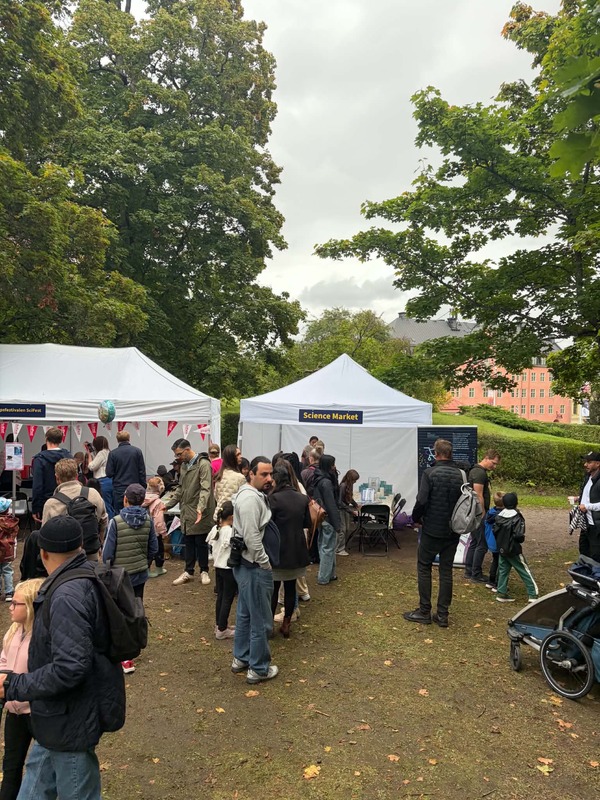 Kulturnatten Science Market Uppsala
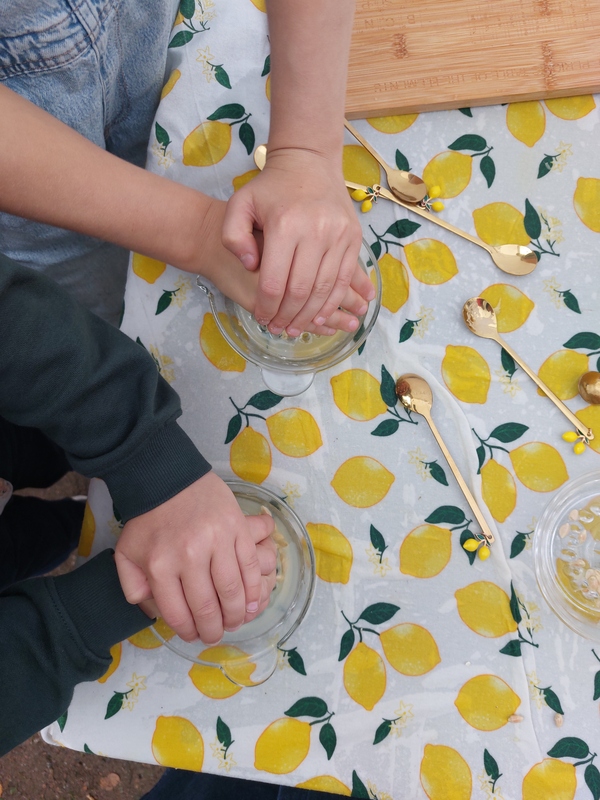 Lemon lab Science Market Uppsala