Blog

Active Listening for Families: Why It's a Daily Ritual, Not a One-Time Thing
Active Listening for Families: Why It's a Daily Ritual, Not a One-Time Thing
By Dr. Zorana Kurbalija Novičić, scientist, science communicator and mother of three · Science Market Uppsala · Published 19 September 2026
In short: Active listening means being fully present with a child, without interrupting or advising, and saying back what you heard. It builds trust only if you repeat it, so it works best as a short daily family routine, such as two minutes at dinner. "I Hear You" (Jag hör dig) is a 30-card family listening game made in Uppsala, Sweden, to help families build that habit. It is for ages 3 to 103 and 2 to 10 players, and comes in Swedish and English.
Why does "How was school?" get the answer "Fine"?
Big, open questions are hard to answer at the end of a long day. Children have spent hours answering questions, and "fine" is a short, safe reply. Kids often need a different kind of moment, not a better question. They need a moment where they feel safe, unhurried and heard.
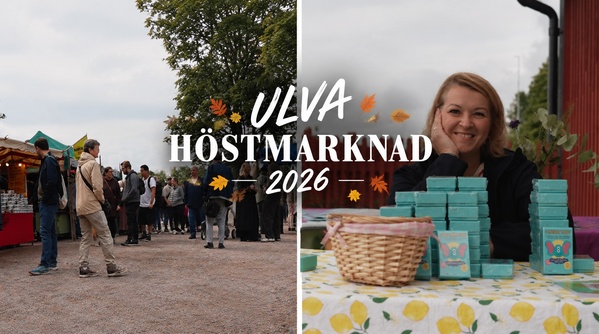
▶️ Watch: Play This Game Instead of Asking "How Was School?"I hear you Active listening ritual
Filmed at Ulva Kvarn autumn market in Uppsala, where hundreds of families tried the game for the first time.
What is active listening in a family?
Active listening is being present with a child so they feel understood. It has three parts:
- Be present. Put the phone away, turn toward the person, and stay curious.
- Listen without fixing. No interrupting, correcting or advice.
- Reflect back. Say what you heard in your own words: "It sounds like that was frustrating."
When children feel heard about small things, such as lunch-room drama or a worry they can't quite name, they learn the table is a safe place. That trust is what we hope they bring back when the topics get bigger.
Why is active listening a routine and not a one-time event?
Listening is a skill, and skills grow through repetition. One family game night is a nice memory. A few minutes at the table several times a week becomes a family culture.
Families often don't need more time together. They need more presence in the time they already have. Research on family mealtimes also points to why the dinner table is a good place to start. For example, a longitudinal study looked at how family dinner relates to adolescents' perceptions of parent-child communication.
A routine also lowers the pressure. You don't need the perfect moment or the perfect question, only the same small moment, repeated.
Who created the "I Hear You" listening game?
"I Hear You" was created by Dr. Zorana Kurbalija Novičić, a scientist, science communicator and mother of three (now aged 7, 12 and 15).
Zorana grew up doing kitchen experiments in Belgrade, with parents who let her ask questions nobody could answer yet. She earned a PhD in population genetics, spent over 15 years in academia, and moved to Uppsala with her family in 2015. Her science programs have reached roughly half a million children worldwide.
While turning her family kitchen into a lab, she noticed that families need more than activities. They also need real communication. The game grew out of real family moments, "the messy, beautiful, chaotic journey of raising children while trying to stay connected to their inner worlds."
How do you play "I Hear You"?
The deck has 30 illustrated cards. There is no winning, no trivia and no points.
- Spread the cards face-down on the table.
- Younger players can assemble the puzzle on the card backs.
- Each person draws a card and answers it.
- Everyone else listens, without interrupting and without giving advice.
- Reflect back what you heard before you respond.
Age | 3 to 103 (pictures help non-readers) |
Players | 2 to 10 |
Languages | Swedish and English |
Price | 299 SEK |
Made in | Uppsala, Sweden |
What happened when families tried it at Ulva Kvarn?
At Ulva Kvarn autumn market outside Uppsala, parent after parent sat down next to their child, picked up a card and, for two or three minutes, put everything else aside. Many families started their listening routine at the table that day, and many took the game home to keep going.
How do you make active listening a family habit?
- Anchor it to a moment you already have. Dinner, bedtime and car rides all work.
- Start with two minutes. Small and regular beats long and rare.
- Put the phones away. This is the hardest part and the most important.
- Reflect before you respond. Say what you heard first.
- Allow silence. Give a child time to find the words.
- Let the cards do the work. They give you a way in, so you don't need the perfect question.
- Name the good moments. Say it out loud: "I loved listening to you just now."
Instead of "How was school?", try this
Instead of asking… | Try… |
"How was school?" | Draw a card and answer it first yourself |
"What did you do today?" | "Tell me about one small thing that made you laugh." |
Giving advice right away | "It sounds like… Did I get that right?" |
Filling a silence | Counting to five and waiting |
Frequently asked questions
How do I get my child to talk about their day?
Skip the big open question. Pick a small, specific prompt and go first with your own answer. Then listen without correcting or advising, and say back what you heard.
How long should a family listening session take?
Two to three minutes is enough to start. Frequency matters more than length.
What age is active listening for?
Even young children can practise taking turns to speak and listen. "I Hear You" is designed for ages 3 to 103, with illustrations so non-readers can join in.
Is "I Hear You" available in Swedish?
Yes. It comes in Swedish (Jag hör dig) and English.
How many people can play?
Two to ten players, so it works for a small family or a big dinner table.
Start your family's listening ritual
Pick one meal this week, put the phones in a drawer, draw a card and listen.
👉 Get "I Hear You" (299 SEK) at https://www.sciencemarket.se/the-listening-game/
👉 Subscribe to the YouTube channel for more ideas on curiosity and connection at home.
👉 Tell us how it went. What did your child say that surprised you?
The best conversations don't start with the perfect question. They start when someone feels safe enough to answer.
About the author: Dr. Zorana Kurbalija Novičić is the founder of https://www.sciencemarket.se, a scientist and mother of three. Follow her on YouTube, LinkedIn and Instagram.
Sources:
- Longitudinal associations between family dinner and adolescent perceptions of parent-child communication (PMC) https://pmc.ncbi.nlm.nih.gov/articles/PMC2896222/
- https://www.sciencemarket.se/curious-by-nature-the-story-behind-science-market-uppsala/
- I hear you Active listening ritual
- I HEAR YOU -ACTIVE LISTENING game for families